

Compost is often thought of as a way to add nutrients to soil. We imagine a dark, crumbly material full of goodness, ready to feed hungry plants. But the Johnson–Su method asks us to look at compost a little differently.
Rather than viewing compost simply as plant food, the Johnson–Su method focuses on soil biology. Its goal is to create a highly diverse, fungal-rich compost that can help bring degraded soil back to life.
This approach has become increasingly popular among regenerative farmers, market gardeners, permaculture practitioners, homesteaders, and soil health enthusiasts because it is simple, low-cost, low-labour, and deeply aligned with the principles of working with nature rather than against it.
At the centre of the method is the Johnson–Su bioreactor: a static, aerobic composting system that does not require turning. It is designed to create the right conditions for beneficial bacteria, fungi, protozoa, nematodes, worms, and other soil organisms to thrive.
In other words, this is compost for people who are interested not just in growing plants, but in growing living soil.
What Is the Johnson–Su Method?
The Johnson–Su method is a composting technique that uses a specially designed bioreactor to produce biologically rich compost over a long, slow maturation period.
Unlike many traditional composting systems, the Johnson–Su bioreactor is not turned. Once the organic material is loaded into the reactor, it is left largely undisturbed. Air is supplied through internal channels, while moisture is carefully maintained to support microbial life.
The end product is often described as a fungal-dominant or biologically enhanced compost. It is usually used in small quantities as a microbial inoculant rather than as a bulk soil amendment.
That distinction is important.
Many composts are applied in large amounts to add organic matter and nutrients. Johnson–Su compost, on the other hand, is often used to introduce beneficial biology into the soil. The idea is that these microbes can help restart soil processes that may have been damaged by compaction, over-cultivation, bare soil, synthetic inputs, erosion, or loss of organic matter.
The compost can be used in several ways, including:
-
Applied directly to soil
-
Made into an extract and sprayed onto fields or beds
-
Used as a seed coating
-
Added around transplants
-
Used in potting mixes or nursery systems
-
Applied alongside cover crops or diverse planting systems
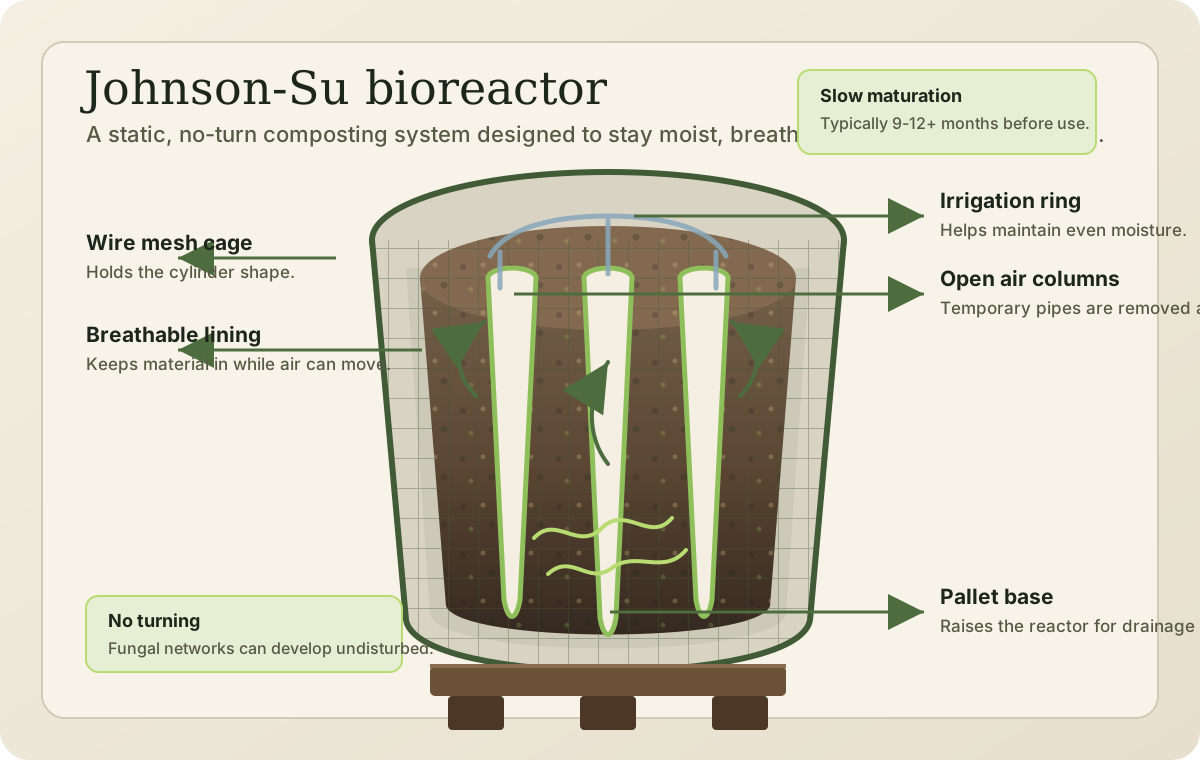
The method is particularly attractive because it is low-tech. A bioreactor can be built from simple materials such as wire mesh, landscape fabric, a pallet base, irrigation tubing, and temporary pipes used to create air holes through the composting material.
It is not fast composting. It is patient composting. Very patient. But that is also part of its magic.
The History of the Johnson–Su Method
The Johnson–Su method was developed by Dr. David C. Johnson and his wife, Hui-Chun Su Johnson.
Dr. Johnson is a molecular biologist and soil researcher whose work has focused on soil microbial communities, carbon cycling, and regenerative agricultural systems. Hui-Chun Su Johnson played an essential role in developing the composting system, particularly in refining the bioreactor’s practical design and management.
The method emerged from research into the relationship between soil biology and plant productivity. Rather than focusing solely on fertiliser inputs, the Johnson–Su approach examines the living relationships between plants and microbes.
Healthy soils are not simply mineral containers. They are living ecosystems. Plant roots release sugars and other compounds into the soil, feeding microbes in the rhizosphere - the narrow zone of soil around the roots. In return, soil organisms can help plants access nutrients, improve soil structure, cycle carbon, and build resilience.
The Johnson–Su bioreactor was designed to produce a compost that supports this living web. Its structure encourages aerobic decomposition while avoiding the repeated disturbance caused by turning. This gives fungal networks time to develop.
This matters because many agricultural soils, especially those that have been intensively tilled or chemically managed, may have reduced fungal populations. Fungi are easily disrupted by physical disturbance. A no-turn system creates a more stable environment where fungal hyphae can grow.
Over time, the Johnson–Su method became associated with BEAM, which stands for Biologically Enhanced Agricultural Management. BEAM is an approach that uses biologically rich compost and compost extracts alongside regenerative practices such as no-till or low-till farming, cover cropping, diverse rotations, and keeping living roots in the soil.
The method has since spread through workshops, farms, soil health groups, permaculture networks, and regenerative agriculture communities around the world.
How the Johnson–Su Bioreactor Works
The Johnson–Su bioreactor is usually built as a cylindrical composting structure. The design allows air to flow through the material without turning.
A typical bioreactor includes:
-
A strong outer cage, often made from wire mesh
-
A breathable inner lining, such as landscape fabric
-
A base, commonly made from a pallet
-
Vertical pipes are inserted during filling to create air channels
-
A simple irrigation system to maintain moisture
-
A diverse mix of organic feedstock
-
Composting worms were added after the initial heating phase
The process begins by preparing the organic materials. These may include plant residues, leaves, wood chips, crop waste, manure-free materials, or other organic feedstocks, depending on the system and intended use. The material is usually moistened thoroughly before being added to the bioreactor.
During filling, pipes are placed vertically through the pile. Once the reactor is full, the pipes are removed, leaving open-air columns. These channels allow oxygen to move through the composting mass.
This is one of the clever parts of the design. Traditional compost piles often need turning because oxygen becomes depleted inside the heap. Turning reintroduces air, but it also disrupts fungal growth. The Johnson–Su method solves this by building airflow into the structure from the start.
After filling, the compost initially goes through a thermophilic phase, when temperatures rise as microbes begin breaking down the material. Once the pile cools, composting worms can be added. These worms help process the material further, contributing to the transformation of the compost into a fine, biologically active product.
Moisture is critical. The compost must remain damp enough for microbial activity, but not so wet that it becomes anaerobic. A dry bioreactor will slow down or stall. A waterlogged one may smell and lose the aerobic conditions the method depends on.
The compost is usually left to mature for at least 9 months, with 12 months or more often recommended. During this time, the material changes from recognisable organic matter into a dense, dark, clay-like compost with a rich biological community.
Why No Turning?
One of the defining features of the Johnson–Su method is that the compost is not turned.
This may seem strange if you are used to traditional hot composting advice. Many composting systems rely on turning to add oxygen, mix materials, control temperature, and speed up decomposition.
But turning also has downsides.
It disturbs fungal networks. It can dry the pile. It requires labour, machinery, or physical effort. It may also encourage composting systems that prioritise speed over biological maturity.
The Johnson–Su method takes a different view. It creates an aerobic structure from the beginning, then leaves the biology alone to do its work.
This fits beautifully with regenerative agriculture principles. Just as no-till farming aims to reduce soil disturbance, the Johnson–Su method reduces disturbance in the compost pile.
That lack of disturbance gives fungi time and space to grow. It also supports a more complex biological community, rather than a fast, bacteria-heavy decomposition process alone.
In simple terms: the Johnson–Su method is slow composting for people who care about microbial life.
Benefits of the Johnson–Su Method
The Johnson–Su method has attracted attention because it offers several practical and ecological benefits.
1. It Produces Biologically Rich Compost
The main benefit of the Johnson–Su method is the quality of the finished compost. The goal is to produce a compost full of beneficial microorganisms that can help restore soil biology.
This is particularly valuable for degraded soils that have lost microbial diversity through tillage, compaction, erosion, chemical inputs, or lack of organic matter.
Rather than simply feeding plants directly, biologically rich compost helps support the soil food web.
2. It Encourages Fungal Growth
Fungi play a crucial role in healthy soil. They help decompose complex organic materials, improve soil structure, form relationships with plants, and support nutrient cycling.
Because the Johnson–Su system is not turned, fungal networks are less disturbed. This allows the compost to develop a stronger fungal component than many conventional composts.
For perennial systems, orchards, agroforestry, pasture, woodland gardens, and regenerative farms, fungal-rich compost can be especially valuable.
3. It Requires Less Labour
Once built and filled, a Johnson–Su bioreactor needs relatively little physical work. There is no regular turning, no heavy machinery, and no need to rebuild the pile repeatedly.
The main job is moisture management.
For growers who want high-quality compost but do not have the time, energy, or equipment to turn large piles, this is a big advantage.
4. It Is Low-Cost and Scalable
A Johnson–Su bioreactor can be built from fairly simple materials. It can be adapted for gardens, smallholdings, community projects, market gardens, and farms.
This makes it accessible. You do not need a large composting facility or expensive equipment to get started.
A backyard gardener might build one small bioreactor. A farm might build several. The principle is the same: create a static, breathable, moist, aerobic environment for biology to thrive.
5. It Avoids Bad Smells When Managed Well
Smelly compost usually means something has gone wrong. Often, the pile has become anaerobic, too wet, compacted, or imbalanced.
A well-built Johnson–Su bioreactor is designed to stay aerobic. Because air can move through the pile, it should not produce the strong unpleasant smells associated with poorly managed compost heaps.
This makes it useful for community gardens, schools, urban growing spaces, and farms near neighbours.
6. It Can Be Used as a Microbial Inoculant
Johnson–Su compost is often used in small quantities to inoculate soil with beneficial organisms.
This is why it can be made into extracts, applied with seed, or used around plant roots. The aim is not to dump large quantities of compost on the land, but to introduce biology that can multiply and interact with plants.
This makes it potentially efficient, especially for larger areas where spreading tonnes of compost may not be practical.
7. It Supports Regenerative Farming Goals
The Johnson–Su method fits naturally with regenerative principles, including:
-
Minimising disturbance
-
Keeping soil covered
-
Supporting living roots
-
Increasing diversity
-
Building soil carbon
-
Improving water infiltration
-
Reducing dependence on synthetic inputs
-
Restoring biological function
It is not a silver bullet. No composting method is. But it can be a powerful tool when used as part of a wider regenerative system.
Johnson–Su Compost and Soil Carbon
One reason the Johnson–Su method has received so much attention is its connection to soil carbon.
Healthy soil biology plays an important role in carbon cycling. Plants draw carbon dioxide from the atmosphere through photosynthesis and convert it into sugars. Some of those sugars are transported underground via root exudates, where they feed soil microbes.
In return, microbes help build stable soil structure and contribute to the formation of soil organic matter.
The Johnson–Su method aims to support this plant-microbe relationship by reintroducing diverse, beneficial organisms into the soil.
However, it is important to be balanced. Compost alone will not magically solve climate change or rebuild soil carbon overnight. The best results are likely to come when biologically rich compost is combined with good land management: living roots, diverse plants, reduced tillage, covered soil, managed grazing where appropriate, and reduced chemical disturbance.
Think of Johnson–Su compost as a starter culture. Like sourdough starter, it works best when the conditions are right for life to keep growing.
How Long Does Johnson–Su Compost Take?
Johnson–Su compost is slow. Most systems need at least 9 months, and many practitioners prefer to leave the compost for 12 months or longer.
This long maturation period is one of the biggest differences between the Johnson–Su method and faster hot composting systems.
For some people, that is a drawback. If you need compost quickly, this may not be the method for you.
But if your aim is microbial richness rather than speed, the long timeline makes sense. Fungal communities and complex soil organisms need time to develop. The method is less about rushing decomposition and more about cultivating a living biological community.
What Can You Put in a Johnson–Su Bioreactor?
Feedstock choices matter.
The Johnson–Su method usually works best with a diverse mix of organic materials. These may include:
-
Leaves
-
Wood chips
-
Crop residues
-
Plant waste
-
Straw
-
Garden trimmings
-
Well-balanced green and brown materials
-
Other clean organic matter
Avoid materials contaminated with herbicides, pesticides, plastics, oils, persistent chemicals, or diseased plant material that may not be safely processed.
If the compost is intended for organic production, growers should also check relevant organic standards and regulations. This is especially important if using manure, animal by-products, or materials from unknown sources.
The cleaner and more diverse the starting materials, the better the potential finished compost.
Common Mistakes to Avoid
The Johnson–Su method is simple but not completely foolproof. Here are some common mistakes.
Letting It Dry Out: Microbes need moisture. If the pile becomes too dry, biological activity slows dramatically. Regular moisture checks are essential.
**Making It Too Wet: **Excess water can push air out of the pile, creating anaerobic conditions. The compost should be moist, not waterlogged.
Poor Airflow: The air channels are central to the design. If the reactor is too wide, too compacted, or built without proper ventilation, the compost may not stay aerobic.
Adding Worms Too Early: Worms should only be added after the initial heating phase has passed. If temperatures are too high, they may die or leave.
Expecting Instant Results: This is not quick compost. It is a long-term biological process. Patience is part of the system.
Treating It as a Standalone Solution: Johnson–Su compost is most effective when used alongside wider soil health practices. If soil is repeatedly tilled, left bare, compacted, or chemically disrupted, the introduced biology may struggle to establish.
How Is Johnson–Su Different from Normal Compost?
The main difference is intention.
Traditional compost is often made to recycle organic waste, add nutrients, and improve soil organic matter. It may be turned regularly and finished relatively quickly.
Johnson–Su compost is made to grow biology.
It is:
-
Static rather than turned
-
Aerobic rather than anaerobic
-
Slow rather than fast
-
Fungal-focused rather than mainly bacterial
-
Used as an inoculant rather than only as a bulk amendment
-
Designed to support soil function rather than simply add nutrients
That does not mean ordinary compost is bad. Good compost is wonderful. But Johnson–Su compost has a different purpose.
It is less like a fertiliser and more like a living culture.
Is the Johnson–Su Method Worth Trying?
For anyone interested in soil health, the Johnson–Su method is definitely worth exploring.
It is simple, elegant, and based on a profound idea: soil fertility is not just chemistry. It is biology.
Plants do not grow in isolation. They grow in relationship with bacteria, fungi, worms, insects, minerals, water, air, and organic matter. When we support those relationships, we begin to move from input-dependent growth towards ecological growth.
The Johnson–Su method gives growers a practical way to cultivate beneficial soil life and return it to the land.
It will not replace good farming practices. It will not fix every soil problem by itself. But as part of a regenerative system, it can be a valuable tool for rebuilding soil function, supporting plant health, improving resilience, and deepening our relationship with the living world beneath our feet.
Johnson–Su Method
The Johnson–Su method is more than a composting technique. It is a shift in perspective.
It invites us to stop seeing soil as an inert growing medium and start seeing it as a living ecosystem. It reminds us that fungi need time, microbes need habitat, and good compost is not just decomposed matter - it is a community of life.
For growers, farmers, and land stewards, the Johnson–Su bioreactor offers a low-cost and accessible way to nurture that life.
In a world of quick fixes and synthetic inputs, there is something quietly radical about a composting system that asks us to slow down, reduce disturbance, keep things moist and breathable, and let biology do what biology does best.
It is composting with patience.
And sometimes, patience is exactly what the soil needs.