
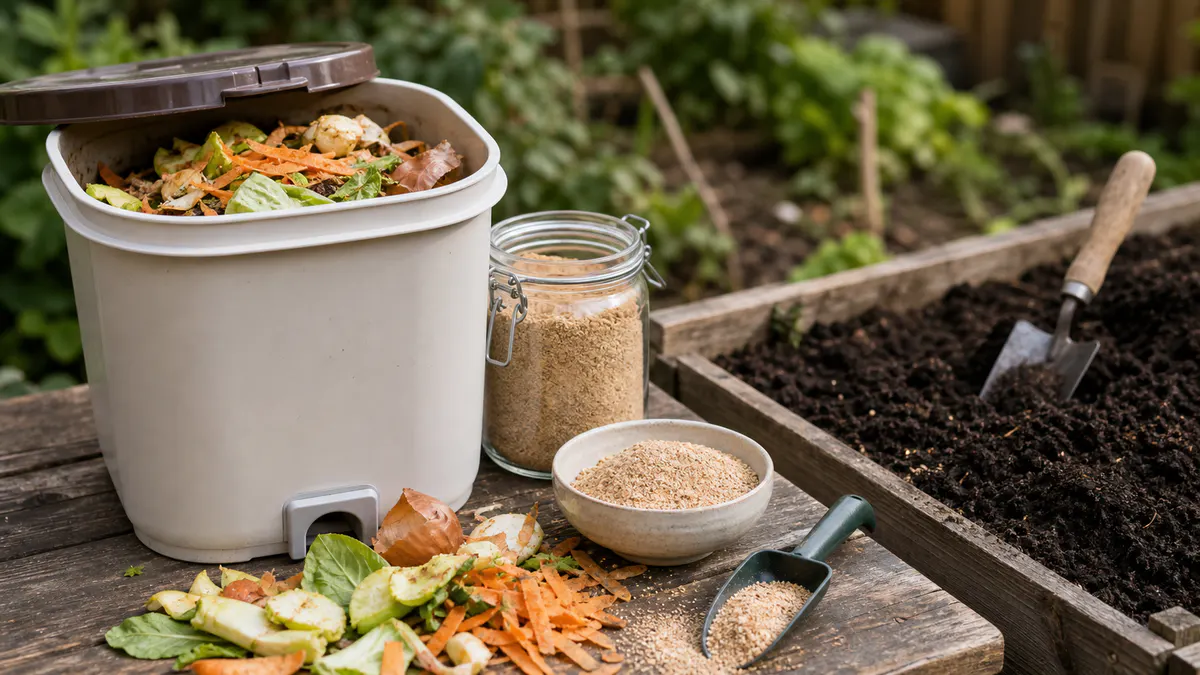
Most of us are used to thinking of food waste as something that either goes in the bin, compost heap, or council food waste caddy. But there is another method that is quietly brilliant, especially for gardeners, smallholders, allotment growers and anyone who wants to turn kitchen scraps into something useful.
It is called bokashi.
Bokashi is a way of fermenting food waste so it can be returned to the soil. It is simple, compact, quick, and surprisingly easy to use once you understand the basics. Unlike traditional composting, bokashi does not rely on food waste rotting down in the open air. Instead, it uses a fermentation process, usually inside a sealed bucket, helped along by beneficial microbes.
For anyone interested in soil health, bokashi is a wonderful method because it keeps nutrients cycling, reduces food waste, and creates a rich soil amendment that can help feed the living world beneath our feet.
What Is Bokashi?
Bokashi is a method of preserving and fermenting organic waste using beneficial microorganisms. The word “bokashi” is Japanese and is often translated as “fermented organic matter”.
In simple terms, bokashi is a way of pickling your food waste before adding it to the soil.
Rather than letting food scraps break down slowly in a compost heap, bokashi uses a sealed container and a special bran or inoculated material that contains helpful microbes. These microbes ferment the food waste in an oxygen-poor environment.
The result is not finished compost in the usual sense. At the end of the bokashi process, the food waste still looks a bit like food waste, although it is usually softer, paler, and has a sharp, pickled smell. But once this fermented material is buried in soil or added to a composting system, it breaks down quickly and becomes part of the soil food web.
Bokashi is especially useful because it allows you to process a wider range of kitchen waste than many traditional compost systems, including cooked food, citrus, small amounts of dairy, and even small amounts of meat or fish if managed carefully.
How Bokashi Works
Bokashi works through fermentation.
In a normal compost heap, oxygen-loving organisms break down organic matter. This is called aerobic decomposition. It works beautifully when a compost heap has the right balance of green materials, brown materials, moisture and air.
Bokashi is different. It is an anaerobic process, which means it happens with little or no oxygen. Food waste is placed into an airtight bucket, then sprinkled with bokashi bran. The bran is usually made from wheat bran, rice bran or another carrier material that has been inoculated with beneficial microorganisms.
These microbes often include lactic acid bacteria, yeasts and photosynthetic bacteria. Together, they help ferment the food rather than allowing it to rot.
This is important because rotting and fermenting are not the same thing.
Rotting food often smells unpleasant because the wrong kinds of microbes take over. Fermentation, when done properly, has a sharper, tangier smell, a bit like vinegar, pickles, cider or sourdough. It should not smell putrid or foul.
The bokashi process helps stabilise the food waste, reduce odours, and prepare it for rapid breakdown once it reaches the soil.
Why Bokashi Is So Good
Bokashi is brilliant because it is simple, space-saving, and soil-friendly.
For many people, composting feels difficult. A compost heap can be too big, too wet, too dry, too smelly, too slow, or too far from the kitchen. Bokashi offers a much easier entry point because it can be done indoors, in a garage, in a shed, on a balcony, or in a small garden.
It is especially helpful for people who want to reduce food waste but do not have room for a large composting system.
But bokashi is not just convenient. It also has real benefits for soil.
When food scraps are thrown away, all the nutrients in that food are lost from your garden or growing system. Bokashi keeps those nutrients in circulation. Instead of sending them to landfill or waste processing, you can return them to the earth.
The fermented material becomes food for soil organisms. Worms, fungi, bacteria and other tiny life forms help break it down further. Over time, this contributes to better soil structure, more biological activity, and richer organic matter.
Healthy soil is not just dirt. It is alive. Bokashi is one way of feeding that life.
Bokashi vs Composting: What Is the Difference?
Bokashi and composting are often talked about together, but they are not quite the same thing.
Traditional composting breaks down organic matter using air, moisture and decomposer organisms. If managed well, a compost heap produces finished compost that can be spread directly onto beds and borders.
Bokashi, on the other hand, ferments food waste first. It does not create finished compost inside the bucket. The fermented waste needs a second stage, usually being buried in soil, added to a compost heap, placed in a wormery in small amounts, or added to a soil factory.
Think of bokashi as a pre-composting method.
It prepares food waste so it can break down quickly and safely when added to soil or compost.
One of the great advantages of bokashi is that it can handle many food items that people are often told to avoid in ordinary compost bins. Cooked leftovers, pasta, bread, citrus peels, onion skins, small bones, dairy and small amounts of meat can all be fermented using bokashi. This makes it a very practical method for real household food waste.
A compost heap is wonderful for garden waste, prunings, leaves, grass clippings and plant material. Bokashi is especially good for kitchen scraps. The two systems can work beautifully together.
What Can You Put in a Bokashi Bin?
Bokashi is very flexible. You can usually add:
Fruit and vegetable peelings, cooked food, rice, pasta, bread, grains, tea leaves, coffee grounds, eggshells, citrus peel, onion skins, small amounts of dairy, small amounts of meat or fish, and plate scrapings.
It is best to chop larger pieces into smaller bits, as this gives the microbes more surface area to work on and helps the material break down faster later.
There are a few things to be careful with. Large bones, lots of liquid, very mouldy food, and excessive amounts of meat or dairy can make the process harder to manage. Bokashi is forgiving, but it works best when food waste is added in reasonable amounts and pressed down well to remove air pockets.
The golden rule is: add food waste, sprinkle bokashi bran, press it down, and seal the lid tightly.
What Do You Need to Start Bokashi?
You do not need much to start bokashi composting.
The basic kit includes a bokashi bucket with a tight-fitting lid, bokashi bran, and somewhere to put the fermented material afterwards.
Many bokashi buckets also have a tap at the bottom. This allows you to drain off liquid that collects during fermentation. This liquid is often called bokashi tea or bokashi juice.
A proper bokashi bucket is useful because it is airtight and designed to drain liquid. However, some people also make homemade versions using lidded buckets. The most important thing is that air is kept out and excess liquid does not build up around the food waste.
You will also need a plan for the second stage. This might be a garden trench, compost bin, wormery, large tub of soil, raised bed, or “soil factory”.
A soil factory is simply a container where fermented bokashi waste is mixed with soil or compost and left to break down. This is useful for people with small gardens or no immediate space to bury food waste.
How to Use a Bokashi Bin
Using a bokashi bin is very straightforward.
First, place your food scraps into the bucket. Add them in layers rather than leaving the lid open all day. Each time you add food waste, sprinkle over a handful of bokashi bran.
Press the food down firmly. This helps remove air pockets and encourages fermentation rather than rotting. Some people use a potato masher, plate, or small compost tamper for this.
Close the lid tightly after each use. Bokashi works best when the bucket stays sealed.
If your bucket has a tap, drain off the liquid every few days. This helps prevent the contents becoming too wet.
Once the bucket is full, seal it and leave it to ferment for around two weeks. During this time, try not to open it. If you have two buckets, you can fill one while the other is fermenting.
After fermentation, the contents can be buried in soil, added to compost, or mixed into a soil factory.
What Should Bokashi Smell Like?
A healthy bokashi bin should smell sharp, sour, slightly sweet, or pickled. It may remind you of vinegar, cider, silage, sauerkraut or fermented vegetables.
It should not smell rotten, putrid or like sewage.
A bad smell usually means too much air has entered the bucket, too much liquid has built up, not enough bokashi bran has been used, or the lid has not sealed properly.
White mould on top is usually fine. This can be a sign of healthy fermentation. Blue, green or black mould, especially with a bad smell, suggests that the process has gone wrong.
Bokashi is fairly easy once you get used to it, but it does like the right conditions: sealed, drained, layered and pressed down.
What Is Bokashi Bran?
Bokashi bran is the material used to start the fermentation process.
It is usually made from bran, sawdust, rice hulls or another dry carrier that has been inoculated with beneficial microbes. These microbes are then dried or stabilised so they can be stored and used when needed.
When sprinkled onto food waste, the bran introduces the microorganisms that help fermentation happen.
You can buy bokashi bran ready-made, and this is usually the easiest option for beginners. Some people also make their own, but this requires more care because the quality of the inoculant and drying process matters.
A good bokashi bran should smell pleasantly sweet, malty or fermented. If it smells musty, rotten or unpleasant, it may no longer be good to use.
What Is Bokashi Tea?
Bokashi tea, sometimes called bokashi juice or leachate, is the liquid that drains from the bucket during fermentation.
This liquid is very strong and should not be poured directly onto plants without dilution. It is acidic and concentrated, so it can damage roots or leaves if used neat.
Some gardeners dilute it heavily and use it around established plants, but it should be used with care. A common approach is to dilute it at around 1:100 with water, although it is best to be cautious and avoid using it on seedlings or delicate plants.
Bokashi liquid can also be poured down drains, where some people use it to help reduce odours. However, it should be used fresh and not stored for long periods, as it can go off.
It is worth remembering that the main value of bokashi is the fermented food waste itself. The liquid is a by-product, not the main prize.
What Happens After Bokashi Fermentation?
After the food waste has fermented, it needs to finish breaking down.
There are several ways to do this.
The simplest method is to dig a trench in the garden, add the bokashi waste, cover it with soil, and leave it to decompose. After a few weeks, the material will usually be well on its way to becoming part of the soil.
You can also add bokashi to a compost heap. This works especially well if you mix it with dry, carbon-rich materials such as leaves, straw, shredded cardboard or woodchip.
Another option is to make a soil factory. This is useful if you do not want to dig trenches or if you garden in containers. Use a large tub, bin or planter, add some soil or old compost, mix in the bokashi waste, cover it with more soil, and leave it to break down.
Some people add small amounts of finished bokashi to wormeries, but this should be done carefully. Bokashi is acidic when first fermented, and worms may avoid it until it has mellowed. Add small amounts at a time and observe how the worms respond.
How Long Does Bokashi Take to Break Down in Soil?
Once buried in soil, bokashi usually breaks down within a few weeks, though the exact time depends on temperature, soil life, moisture and the type of food waste.
In warm, biologically active soil, it may disappear quickly. In cold winter soil, it will take longer.
You may still see traces of eggshells, bones, avocado skins or tough citrus peel for a while. This is normal. Different materials break down at different speeds.
The key point is that bokashi helps prepare food waste so soil organisms can finish the job.
Is Bokashi Good for Soil?
Yes, bokashi can be very good for soil when used properly.
It adds organic matter, helps recycle nutrients, and feeds soil organisms. Instead of treating food waste as rubbish, bokashi turns it into a resource.
Soil health depends on the living relationships between minerals, organic matter, microbes, fungi, plant roots, worms and countless small organisms. By adding fermented organic matter, you are feeding this underground community.
Over time, organic matter can help improve soil structure, moisture retention and biological activity. These are all important for strong plant growth.
Bokashi should not be seen as a complete fertiliser or magic solution. It is one useful tool within a wider soil-care approach. It works best alongside other methods such as composting, mulching, growing plants, reducing soil disturbance, using cover crops and avoiding unnecessary chemicals.
Why Gardeners Love Bokashi
Gardeners often love bokashi because it fits into real life.
Not everyone has space for a large compost heap. Not everyone wants food scraps sitting around in an open bin. Not everyone has the perfect balance of greens and browns available at the right time.
Bokashi gives you a neat, tidy and manageable way to deal with kitchen waste.
It is especially useful in winter, when compost heaps slow down. You can continue fermenting food waste indoors or in a shed, then add it to soil or compost when conditions are better.
It is also useful for people who produce lots of kitchen scraps, such as families, keen cooks, small cafés, community gardens, schools and growers.
For allotment holders, bokashi can be a way of bringing nutrients back to the plot without hauling bags of compost or fertiliser. For home gardeners, it can help close the loop between kitchen and garden.
Bokashi and the Soil Food Web
One of the most exciting things about bokashi is how it connects with the soil food web.
The soil food web is the living network of organisms in the soil. It includes bacteria, fungi, protozoa, nematodes, arthropods, worms and plant roots. These organisms help cycle nutrients, build soil structure and support plant health.
When bokashi is added to soil, it becomes food for this living network. Microbes begin breaking it down further. Worms and other soil creatures move in. Fungi may help digest tougher materials. Over time, the nutrients in the food waste are transformed into forms that plants and soil organisms can use.
This is very different from simply throwing food away.
Bokashi helps us see food waste not as waste, but as part of a cycle.
Food grows from soil. We eat the food. Scraps return to soil. Soil life turns those scraps into fertility. Plants grow again.
It is a beautifully simple loop.
Bokashi for Small Spaces
One of the biggest benefits of bokashi is that it works well in small spaces.
You do not need a large garden. You do not need a big compost bay. You do not even need much outdoor space to start.
A bokashi bucket can sit under a sink, in a utility room, garage, shed or balcony cupboard. For people living in towns, flats or rented homes, it can be a much more realistic option than traditional composting.
The only thing you need to think through is where the fermented material will go afterwards. If you do not have garden soil, you could use a large container of soil, give the fermented waste to a community garden, add it to a shared composting system, or use it in planters once it has fully broken down.
For container gardeners, bokashi can be part of a system for refreshing old compost and rebuilding fertility.
Common Bokashi Mistakes
Bokashi is easy, but a few common mistakes can cause problems.
The first is allowing too much air into the bucket. Bokashi needs a sealed environment. Open the lid briefly, add your scraps, press them down, add bran, then close the lid tightly.
The second mistake is letting the bucket get too wet. Drain the liquid regularly if your bucket has a tap. Too much liquid can lead to unpleasant smells.
The third mistake is not using enough bran. You do not need huge amounts, but each layer of food waste should have a sprinkle of bokashi bran to keep fermentation active.
The fourth mistake is expecting finished compost from the bucket. Bokashi does not produce crumbly compost at the first stage. It produces fermented food waste that still needs to be added to soil, compost or a soil factory.
The fifth mistake is adding bokashi directly around delicate plant roots too soon. Fresh bokashi is acidic and active. It is usually better to bury it away from roots and allow it to mellow before planting into that area.
Is Bokashi Better Than Composting?
Bokashi is not necessarily better than composting. It is different.
Traditional composting is excellent for garden waste and creating finished compost. Bokashi is excellent for kitchen waste and for people who want a compact, low-odour system.
The best method depends on your space, lifestyle and growing needs.
In many cases, bokashi and composting work best together. Bokashi deals with the food scraps, while the compost heap deals with garden waste. The fermented bokashi can then be added to the compost heap to continue breaking down.
Rather than choosing one method, it can help to think of bokashi as another tool in the soil-care toolbox.
Bokashi and Food Waste
Food waste is a huge environmental issue. When food is thrown away, all the energy, water, land, labour and nutrients used to produce it are wasted too.
Bokashi does not solve the whole problem, but it does help households and growers take responsibility for the scraps they cannot avoid.
Vegetable peelings, plate leftovers, stale bread, old rice and fruit skins all contain nutrients that came from the soil. Bokashi gives us a way to return them.
There is something deeply satisfying about this. It turns a daily waste problem into a soil-building habit.
Instead of seeing the bin as the end of the story, bokashi helps make the garden part of the cycle.
Can Bokashi Help Plants Grow?
Bokashi can support plant growth by helping improve the soil over time.
It adds organic matter and nutrients, and it encourages biological activity. When fully broken down in soil, the material can contribute to a richer growing environment.
However, it is important not to treat bokashi like an instant plant food. Freshly fermented bokashi is too strong and acidic to place directly against many plant roots. It needs time in the soil before planting.
Once it has broken down, the nutrients and organic matter become part of the wider soil system.
For best results, use bokashi as part of a broader approach to soil health. Feed the soil, protect it with mulch, keep living roots in the ground where possible, avoid unnecessary digging, and encourage worms and microbes to do what they do best.
Bokashi for Allotments and Growers
Bokashi can be especially useful on allotments and small growing sites.
Many allotment holders produce kitchen scraps at home and garden waste on the plot. Bokashi allows food waste to be fermented at home and then taken to the allotment when ready. It can be buried in trenches, added to compost bays, or used to enrich future growing areas.
For market gardeners and small-scale growers, bokashi may also have a place as part of a wider fertility strategy, especially where food scraps, crop residues or local organic materials are available.
It is not a replacement for good compost, careful crop planning or soil testing, but it can help keep nutrients cycling locally.
Is Bokashi Safe?
Bokashi is generally safe when managed sensibly.
As with any food waste system, basic hygiene matters. Keep the lid closed, wash hands after handling waste, clean the bucket between uses, and avoid attracting pests by burying fermented waste properly.
If burying bokashi in the garden, cover it well with soil. This helps prevent animals digging it up and allows soil organisms to get to work.
If using meat, fish or dairy, use moderate amounts and make sure the material is well fermented and buried deeply enough.
A well-managed bokashi system should not attract flies or rodents because the waste is sealed during fermentation and buried afterwards.
A Simple Bokashi Routine
A simple bokashi routine might look like this:
Keep a small caddy in the kitchen for daily scraps. Once a day, empty the caddy into the bokashi bucket. Sprinkle with bokashi bran, press the waste down firmly, and close the lid.
Drain the liquid every few days.
When the bucket is full, seal it and leave it for around two weeks. Start filling a second bucket if you have one.
After fermentation, bury the contents in a trench, add them to a compost heap, or mix them into a soil factory.
Leave the material to break down before planting into it.
This routine is easy to build into everyday life. Like many soil-friendly habits, it becomes second nature once you have done it a few times.
Bokashi Troubleshooting
If your bokashi smells rotten, check that the lid is sealing properly, use more bran, drain the liquid more often, and make sure you are pressing the food waste down firmly.
If the bucket is very wet, add drier food waste where possible and drain more regularly.
If there is white mould, this is usually fine. If there is blue, green or black mould with a bad smell, the batch may have failed.
If animals dig up buried bokashi, bury it deeper, cover it more thoroughly, or use a secure composting system.
If worms avoid bokashi in a wormery, add less at a time and let the bokashi mellow before feeding it to them.
Most problems come down to too much air, too much liquid, not enough bran, or not enough time.
Frequently Asked Questions About Bokashi
Is bokashi the same as compost?
No. Bokashi is a fermentation process, not finished compost. The fermented waste still needs to be buried in soil, added to compost, or mixed into a soil factory to complete the breakdown process.
Does bokashi smell?
A healthy bokashi bin should smell sour, sharp or pickled. It should not smell rotten. Bad smells usually mean too much air, too much liquid or too little bokashi bran.
Can I put cooked food in bokashi?
Yes. Cooked food is one of the reasons many people choose bokashi. You can add cooked leftovers, rice, pasta, bread and plate scrapings.
Can I put meat and dairy in bokashi?
Small amounts of meat, fish and dairy can usually be added, but they should be managed carefully. Use enough bran, keep the bucket sealed, and bury the finished bokashi well.
Can I add bokashi straight to plants?
It is best not to add fresh bokashi directly against plant roots. It is acidic when first fermented and needs time to break down in soil before planting.
How long does bokashi take?
The first fermentation stage usually takes around two weeks after the bucket is full. Once buried in soil, it may take a few more weeks to break down, depending on conditions.
Do I need two bokashi buckets?
You do not have to have two, but it makes the process easier. One bucket can ferment while the other is being filled.
What is bokashi bran made from?
Bokashi bran is usually made from bran or another dry material inoculated with beneficial microorganisms.
Can bokashi go in a wormery?
Yes, but only in small amounts at first. Fresh bokashi can be acidic, so worms may need time to adjust. Letting it mellow before adding it to a wormery can help.
Is bokashi good for beginners?
Yes. Bokashi is one of the easiest ways to start recycling kitchen scraps, especially if you have limited space or find traditional composting difficult.
Final Thoughts: Bokashi as a Soil-Building Habit
Bokashi is a small, practical way to change how we think about waste.
It reminds us that food scraps are not rubbish. They are unfinished fertility. They are nutrients waiting to return to the soil.
For gardeners, bokashi offers a simple way to feed the soil food web, reduce household waste and build a deeper relationship with the natural cycles that support plant life.
You do not need to be an expert. You do not need a huge garden. You do not need a perfect compost heap.
You just need a bucket, some bokashi bran, your kitchen scraps, and a willingness to see waste differently.
In a world where so much organic matter is thrown away, bokashi brings the cycle home.
It is simple, humble, and quietly powerful.
Feed your scraps to the soil, and the soil will feed life back.